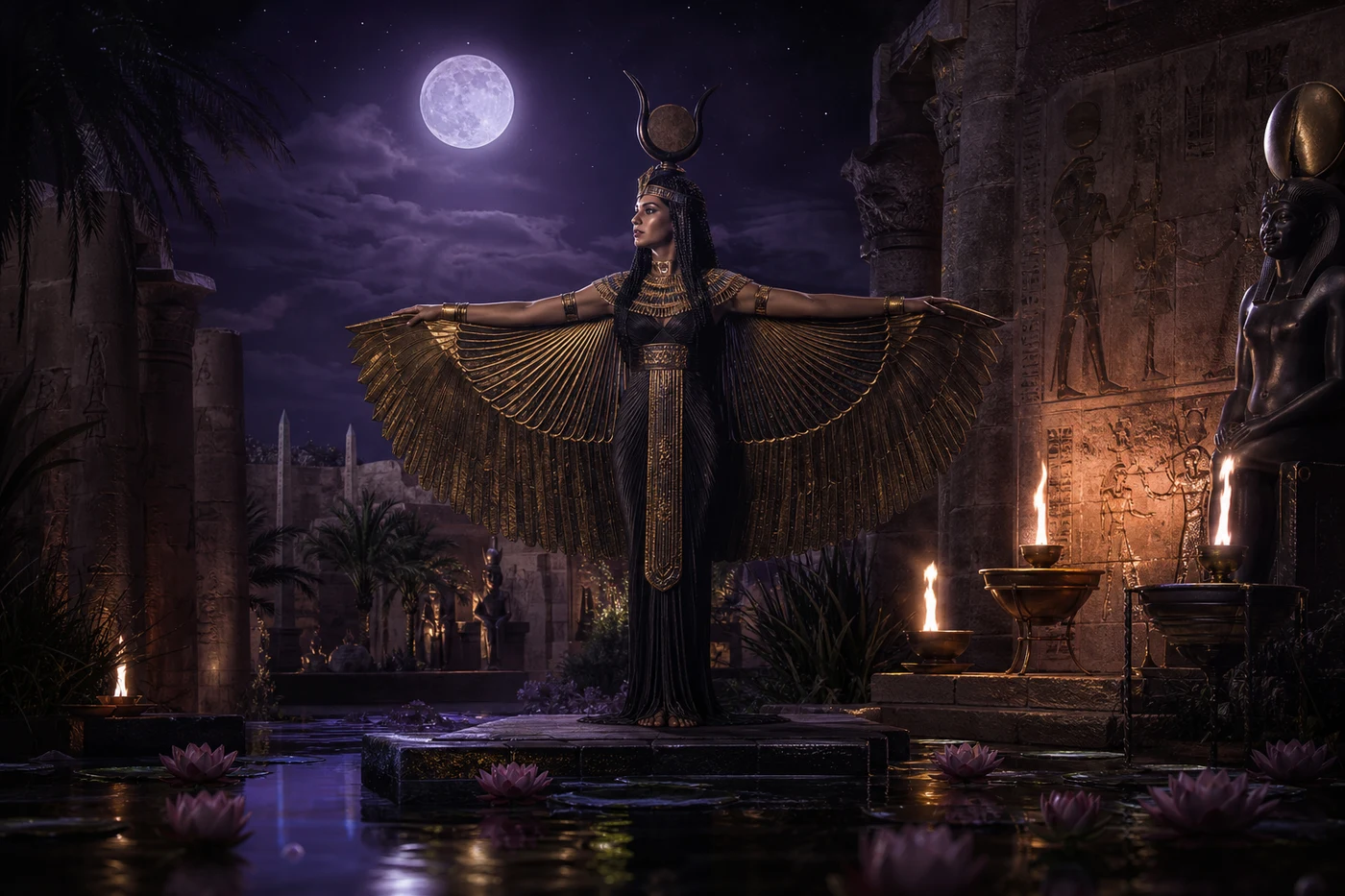
Isis: myths, magic, protection and spiritual rebirth
Isis is one of the most influential figures in ancient Egyptian religion. Goddess of magic, motherhood, protection and restoration, she is more than a gentle mother figure: her myth also speaks of will, intelligence, grief and rebuilding.
Who is Isis?
Isis, called Aset in ancient Egypt, is a goddess whose roles developed across centuries. She appears as sister and wife of Osiris, mother of Horus, magician, symbolic healer and protector of the living and the dead.
Egyptian sources do not form one perfectly continuous story. Temples, hymns and images add nuance over time, so a modern simplified version should not be presented as the only truth.
The Osiris myth
In the best-known story, Osiris is killed and his body scattered by Seth. Isis searches for the fragments, gathers them and makes a form of rebirth possible. Horus continues this line and becomes a figure of restored order.
The myth is not a recipe for abolishing death. It speaks of what can be repaired, carried forward and transformed after rupture. Rebirth is a power of meaning, not a medical promise.
Isis and magic
Isis's magic is often understood through knowledge of names, speech and invisible forces. For a contemporary practice, this can become an exploration of the words we repeat: promises, boundaries, prayers, affirmations and commitments. Words do not control the universe, but they shape attention and action.
Protection and motherhood
Isis protects Horus, families and vulnerable passages. Her archetype does not mean carrying everything to save others. It reminds us that protection requires discernment, strategy and boundaries.
Name what deserves protection in your life, then choose one concrete boundary that preserves it.
Symbols
The Isis knot, or tyet, is often connected with protection in Egyptological interpretations. The throne in her name and imagery suggests sovereignty. Open wings evoke guardianship, breath and welcome.
Symbols should not be used as guaranteed talismans. They are doors for reflection and reminders of a spiritual relationship.
Grief and rebuilding
Isis is meaningful during loss: the end of a relationship, identity change, grief, exhaustion or an interrupted project. Her story does not ask us to forget. It invites us to gather fragments, acknowledge pain and rebuild a living form.
Write what was lost, what remains and what can now emerge. This is personal reflection, not a reconstruction of an ancient Egyptian rite.
Respectful practice
Ancient Egypt is not a collection of mysterious images available without context. Study sources, avoid merging Isis automatically with every mother goddess and do not claim an initiation you have not received.
A respectful approach can use reading, journaling and contemplation without imitating funerary or priestly practices.
With the Grimoire
Connect Isis symbolism with lunar phases, rebuilding dreams, tarot and emotional cycles. With an active subscription, your birth chart can help you observe periods when protection, inner motherhood or rebirth become stronger themes.