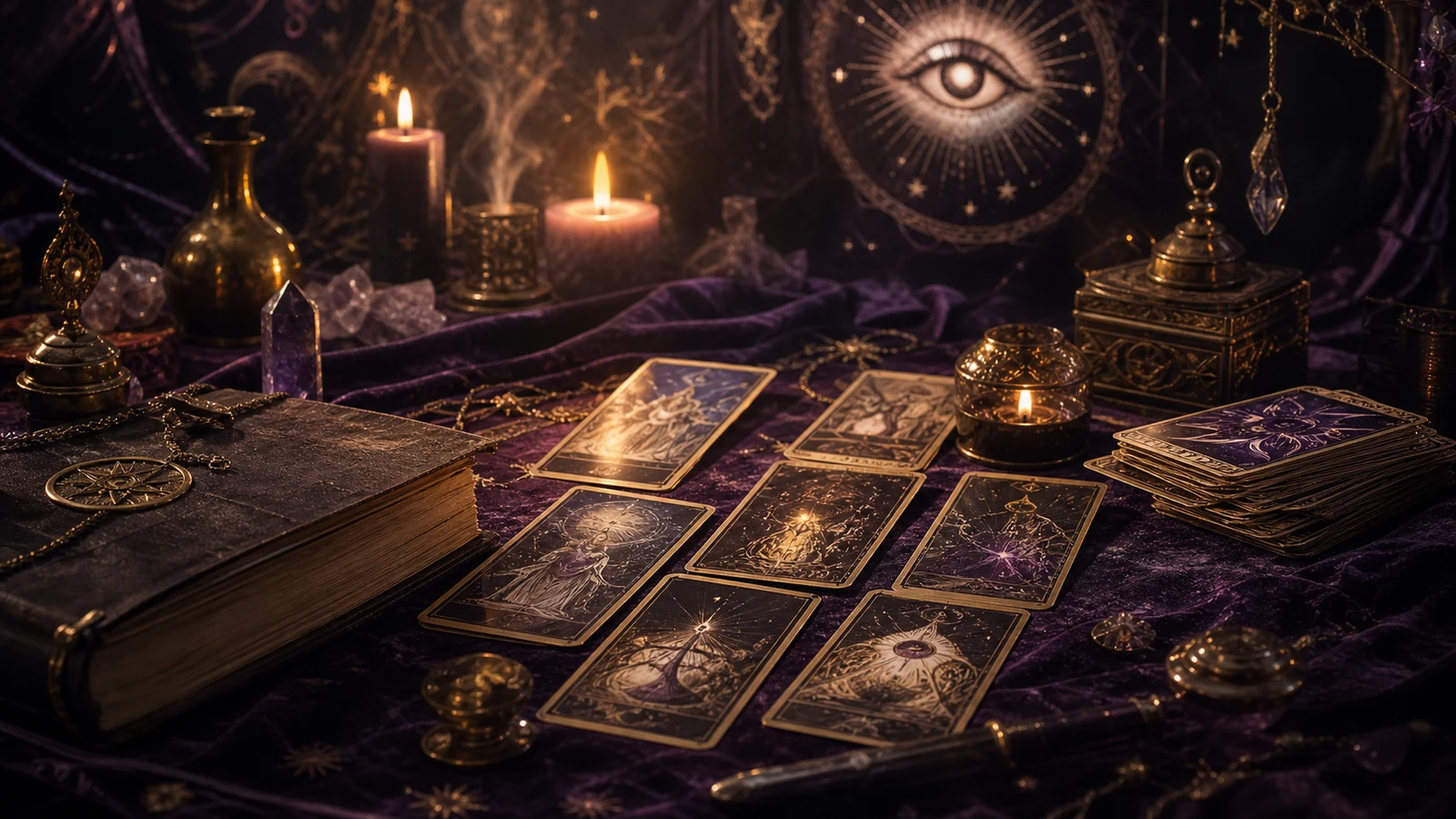
Tarot and intuition: how to listen to the first impression
The first impression in tarot is often the most precious, but also the easiest to censor. Before searching every possible meaning, there is a more direct listening: what the card makes you feel immediately.
Why the first impression matters
When a card appears, the mind often wants to move fast: search the definition, check a book, compare several interpretations. Yet tarot also works as a mirror. Before knowledge, there is impact: a color, a character, a detail, a tension, a relief.
The first impression is not always “the final answer”. It is the doorway. It shows where your attention lands before the mind starts controlling.
Observe before interpreting
Take ten seconds without searching for the classic meaning. Just look at the card. Which detail attracts the eye? Which area feels heavy, bright, strange or absent? Which figure disturbs or reassures you?
Only then name the impression in simple words: “closure”, “waiting”, “momentum”, “fear”, “passage”, “protection”. This step avoids reciting a tarot file without listening to the living reading.
The body as compass
Intuitive tarot does not happen only in the head. A card can tighten the throat, open the chest, contract the belly or make you breathe more deeply. These signals should not be dramatized, but they add precious information.
If a “positive” card makes you uneasy, listen. Perhaps it speaks of an opportunity you do not dare receive. If a “difficult” card calms you, it may indicate a truth finally named.
Crossing intuition and structure
Intuition alone can become projection. Structure alone can become cold. The best reading combines both: first impression, visible symbols, traditional meaning, question asked and real context.
For example, the Moon can speak of dreams, illusion, hypersensitivity or night intuition. Your first impression indicates which door to open. If you see the water first, work with emotion. If you see the dog and wolf, work with instinct. If you see the path, work with passage.
Mistakes to avoid
Do not draw ten times to get a more reassuring answer. Do not force a card to say what you want to hear. Do not confuse intuition with anxiety: intuition is often simple, anxiety repeats and accelerates.
Also avoid reading for someone without a clear frame. An intuitive reading must remain respectful, clear and non-intrusive.
Three-sentence method
After drawing one card, write:
This method is enough for a card of the day, an emotional reading or a simple question.
- What I see first.
- What I feel in the body.
- What the card asks me to look at today.
With the Grimoire
In the Grimoire, readings can be connected to mood, cycles, transits and journal notes. With an active subscription, you can observe whether certain cards return during the same emotional states. Tarot then becomes more than a punctual answer: it becomes a symbolic memory of your evolution.